
East Coast Birding - Tanzania and Kenya
Birding & Big Game viewing on the coast
Birding the East Coast of Africa is rarely offered as an independent Tour
by many safari outfitters or birding specialized organizations, while still very few would think
of taking an Independent trip just birding the Eastern Coast of Tanzania and Kenya and their adjacent areas.
This tour gives an opportunity to explore the Eastern Arc Mountains as well as National parks and
areas of endemism including the Arabuko Sokoke Forest of Kenya, East and West Usambara Mountains,
South Pare Mountains, Lake Jipe Area and Tsavo East National park. You can take the tour as part of
an extension from various major tours or from Mombasa Kenya as part of your Beach holiday.
Coastal Birding Itinerary 12 days:
Featuring : Eastern Arc Mountains – Usambara Mountains, South Pare Mountains,
Taita Hills, Tsavo East National Park and Aarabuko Sokoke Forest Birding
Day 1: We will check out of our Resort at Diani Beach in Mombasa, driving a little bit off the coast,
we will head South East into Tanzania, on the way we will stop for species that are possible along the
bushes as we drive, such as the Zanzibar Red Bishop, African Golden Weaver, Golden Palm Weaver, Mombasa
Wood Pecker, Blue Spotted Wood Dove and others. We will stop at the border and process our Visas into
Tanzania then drive on to the Eastern Side of the Usambara Mountains, we will drive to the high elevation
of Amani Nature Reserve in the East Usambaras – the only true coastal forest remaining in Tanzania if not
Africa's Eastern coastal strip.
We hope to arrive Amani nature reserve in the early hours of the day.
Depending on time of arrival we may locally bird around the lower forest of East Usambara mountains as we
drive into the higher elevation of the East Usambara Mountains at Amani Nature Reserve Rest House where
we stay. The Rest House offers basic accommodation originally designed for scientific researchers in Botany
and Malaria and formerly the headquaters of IUCN. The Rest House, though basic has many of its bed rooms
en suite with a warm running shower, a dining area to take a very limited number of people serving delicious
fresh food stuff locally growing around Amani. A cold beer is always present-served at the dining area.
Day 2: We will spend the day birding the Amani area. The morning before breakfast should be well birded around the
Malaria center where it is usually easier to see the sunbirds and the Green Headed Oriol. There are a number
of green buls too. After breakfast, you may take the Mbomole trails which leads deep into the forest where
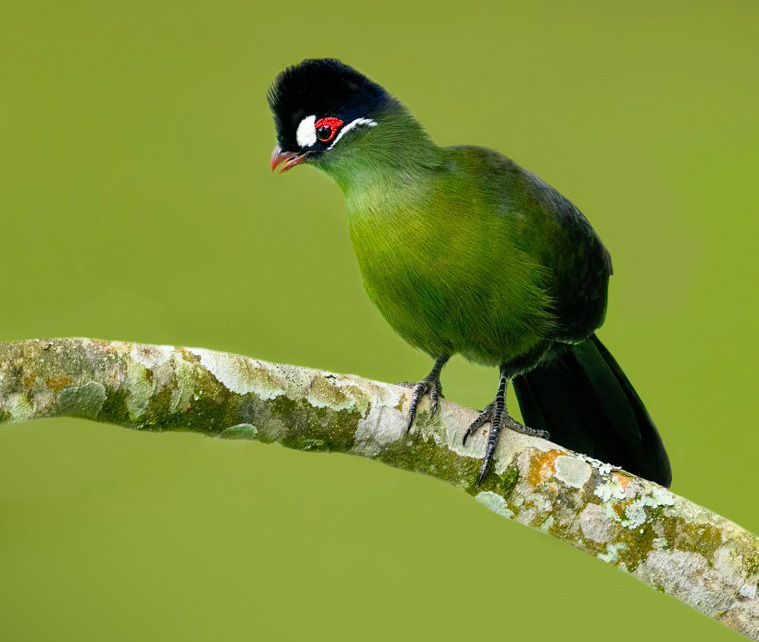
species such as the White Chested Alethe, Usambara Akalat, Green Barbet, Fischers Turaco and Black Backed
Weaver, Trumpeter Hornbill as well as an array of other forest specialities can be spotted, this morning,
we may chance, the Southern Banded Snake Eagle, Wallers Chestnut Sterling, Kenricks Sterling, Black Bellied
Glossy Sterling, Palm Nut Vultures, Cabanis bunting… etc
The afternoon will see us visiting tea plantaion where forest reminants and streams may reward us with some
more specialities. Evening back to Amani.
Day 3: After local birding around, we will transfer to the Western side of the Usambara Mountains. We hope to get
to the West Usambara Mountains in the late evening, the mountains rise up steeply from the surrounding plains
and can only be entered from a few roads including the only Tarmac roads dating back in the old German and
English Colonial times. From a distance, the mountains are a colorful mosaic. On the fertile slopes around
the towns of Soni and Lushoto, farmers cultivate small plots. The view points on the southern and western side
of Usambara are well known for the spectacular view of Mkomazi and Handeni plains.
Because of its pleasant
climate, the mountains were favored by the Germans and the English during Colonial times as is evidenced by
the numerous historic buildings from the past. The Mullers Mountain Lodge itself where we stay is an old
Residence of the German Chief who lived here during the colonial times. Muller Mountain Lodge is the only
upper market accommodation in the area with superb service.You will not forget the great cookery at this
home residence when you leave after a couple of nights here. Bon apetit.
Day 4: After an early breakfast you will explore some of the forest reminants in the area for the many rare and
endemic species present in this area. The mountains offer a variety of Tanzanian Endemics and rarities to
include: The Fullebourns Black Boubou, Usamabara Weaver, The Black Fronted Bush Shrike and the Grey Cuckoo
Shrike, others include The Yellow Throated Woodland Warbler and an endless list of Greenbuls to include
the tiny Greenbul and the mountain Greenbul, Shelly's Yellow Stripped Strip Chicked.
The African Tailor bird
( a new species on record ) will be another bird to look out for here. Much of the Forest in the West Usambaras
has been leveled for cultivation so much of the natural forest has been lost, however there are some good
spots for birding such as the forest towards the sawmill and another small portion behind the Mullers lodge
where birding is great. Evening return to the Mullers Lodge for Dinner and overnight.
Day 5: We will drive out of the Usambara Mountains and head to the same village, on the way we will be exploring
dry country steppes, for possibilities of the Black Bellied Sun Bird and others, we then continue to the
South Pare Mountains for a further exploration. Overnight at the Elephant Motel in same village.
Day 6: We will drive to the Taita Hills, crossing the border back into Kenya, once in the area we will bird locally
targeting the Taita endemics including possibilities of the white eye and other country species. We will
stay at the Salt Lick Safari Lodge. Salt Lick Safari Lodge is located in the heart of the privately owned
at the foot of the Taita Hills, and consists of 96 rooms elevated on stilts and linked by raised walkways.
Most of the guestrooms, as well as the restaurant and the terraced bar command spectacular views of the
waterhole and surrounding grasslands, where elephant, buffalo and a variety of plains game can be seen
throughout much of the year. The area is illuminated by floodlights to facilitate game viewing at night,
and there is an underground tunnel and chamber allowing guests to closely and safely view wildlife at
ground level. Dinner and overnight.
Day 7: Taita Hills Area birding and game viewing. Overnight Salt Lick Lodge.
Day 8: We will transfer to Voi and on into Tsavo East National park. Rest of the day birding & big game viewing in the
area. Overnight at the Voi Safari Lodge.
Day 9: Full day birding & big game viewing. Overnight Voi Safari Lodge.
Day 10: Drive to Arabuko Sokoke Forest, birding the forest rest of the day. Overnight at a resort in Malindi.
Day 11: Birding Arabuko Sokoke and Mida Creek for waders such as the Crab Plover etc. Overnight at a resort in Malindi.
Day 12: Drive back to Mombasa, catch up with the various flights or rest at the beach.
END
INQUIRE ABOUT THIS SAFARI
More Safaris
Tanzania Safaris Main Page
Tanzania Wildlife and Nature safari 9 days
Wildlife and Nature Tour 7 Days
Tanzania Bird watching Tour 10 Days
Tanzania Birding in 10 days
Bird watching 8 Days Safari
Mount
Kilimanjaro Climb
Tanzania
Big Game and Bird watching Safari
Tanzania Birds and
Beasts Safari
Off Track Tanzania Deluxe
Safari
|